Tasmanian Oak (Eucalyptus regnans, Eucalyptus obliqua and Eucalyptus delegatensis), as the name suggests, is a common Tasmanian hardwood. Favoured by just about everyone because it is easy to work (generally), is strong, looks good and looks ever better with age.

Notice that there are three species of tree lumped in together and classified as Tas Oak. This is because the timber in each species is very similar to the others; in looks, workability and strength. The most notable of the three is the mighty Swamp Gum (Eucalyptus regnans); it is the world’s tallest flowering plant and second only in height to the Californian Redwood – and if it wasn’t for overenthusiastic logging in the late 1800’s would be classified as the world’s tallest tree. Newspaper reports from the time describe logs measuring over 150 yards long – which would have made those trees way taller than the Redwood.
Like all Eucalypts, they suffer the effects of fire, but where most Eucalypts regenerate, the Swamp Gum dies. In the temperate rainforests of Tasmania the trees can grow without ever being touched by fire (just too damn wet). So the trees can grow to an enormous size and live to a very old age – with some estimated to be over 400 years old (which is very old for a gum tree).
As for the timber itself – old, seasoned, weathered Tas Oak can’t be beaten for character. There is something in the wood that causes ‘flecks’ in the grain patterns to go very dark with age. Most timbers become darker with age but Tas Oak ages better than almost any other timber. It seems to have a richness and depth that is accentuated as it darkens; the grain also becomes more pronounced.
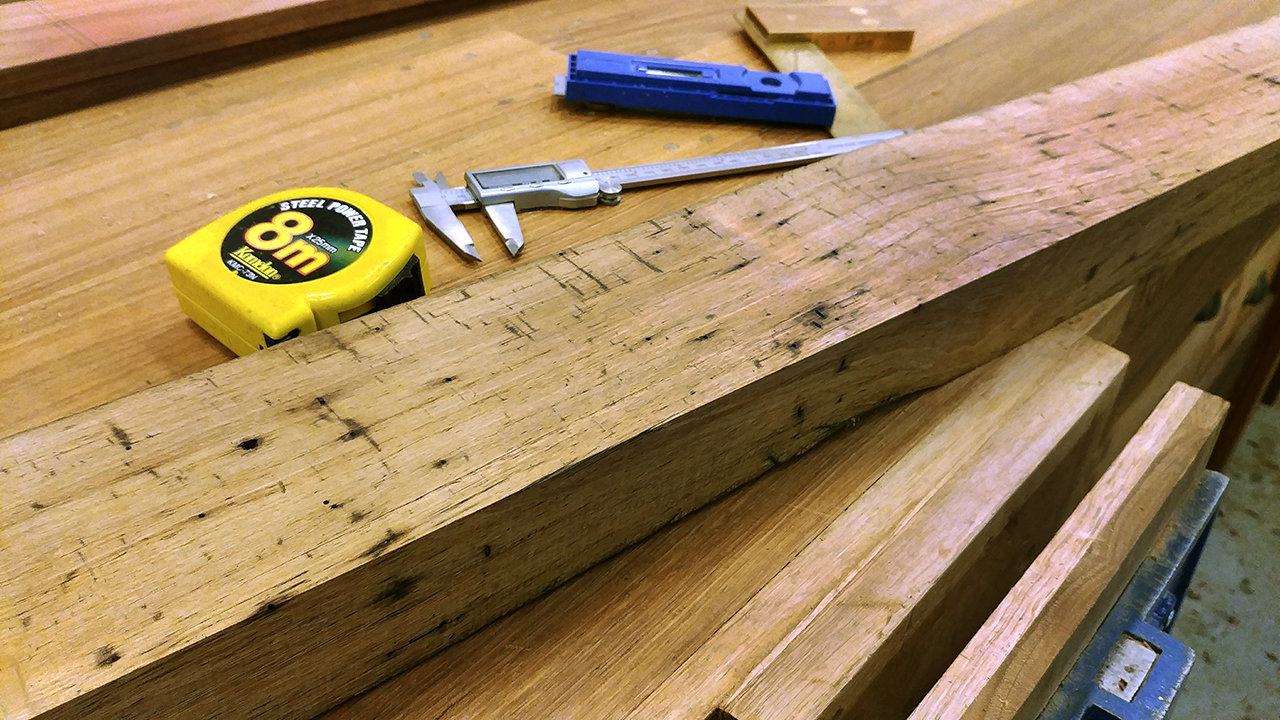
It can be bought at just about any hardware store but the older it is and the more weathered it is the better (for us anyway). House demolitions, old sheds and fences all produce some of the best Tas Oak for the things we like to make.

It is a nice timber for woodturners to use when it’s not all that old. Some of the old Tas Oak we have is extremely difficult to turn due to its hardness and density – it becomes an exercise in tool sharpening more than turning. Having said that, once turned, it is truly beautiful – just has so much character.
Certainly one of our favourite timbers.

Wikipedia:
https://en.wikipedia.org/wiki/Eucalyptus_regnans
https://en.wikipedia.org/wiki/Eucalyptus_obliqua
https://en.wikipedia.org/wiki/Eucalyptus_delegatensis
Wood Solutions:
 Blue Swallow Designs